Track record
Certificates
Explore my professional certifications and achievements obtained from various industry-leading institutions.
Track record
Explore my professional certifications and achievements obtained from various industry-leading institutions.
The prerequisites for the Azure architect exam: cost, governance, security, high availability and design decisions. It is the mental map I use before proposing a cloud architecture.
Bicep, ARM and Desired State Configuration to put infrastructure under version control: templates, parameters, environments and desired state. What I took away is that a rebuilt server must be indistinguishable from the previous one.
Security and evidence inside the pipeline: policies as code, dependency checks, licences and traceability for every change. What I took away is that compliance is a product shipped alongside the software.
Microsoft Applied Skill: AI agents on Azure with conversation memory and the ability to act, from a single expense agent to a multi-agent travel booking flow.
Version control, packages, registries and updating dependency resolution. What I took away is that a transitive dependency is my code in everything that matters except the licence.
From agent fundamentals to a deployable multi-agent solution on Microsoft Foundry: tools, MCP, Foundry IQ, Agent Framework and A2A.
Google Distributed Cloud air-gapped: internet-disconnected infrastructure for classified environments, its architecture and operation.
What an internal platform really is: paved roads, golden paths, self-service for product teams and developer experience. What I took away is that the goal is not the technology, it is that the product team stops asking.
Networking techniques for AI infrastructure on Google Cloud: NCCL, GKE Inference Gateway and the token path from model to user.
Orchestration and automation of AI infrastructure on Google Cloud: GKE, inference queues and automated lifecycle operations.
Microsoft Entra ID as a cloud identity service: users and groups, MFA on top of preventive measures and self-service password reset.
Six AD DS modules —domain controllers, FSMO, policy and advanced features— closing with hybrid identity to Microsoft Entra ID and IaaS DCs in Azure.
Securing a real object store: managed identities, RBAC, Shared Access Keys, static website SAS tokens and Defender for Storage. What I took away is that an anonymous bucket is not a misconfiguration, it is a decision.
Azure Key Vault for keys, connection strings and certificates, and Azure App Configuration for multi-environment settings with labels and Key Vault references.
Active Directory Domain Services from logical and physical components to advanced administration: domain controllers, FSMO, group policy, trusts, replication and AD CS.
Azure Storage layered security —encryption at rest and in transit, CORS, access control and auditing — and Azure RBAC with hierarchical scopes.
Google's SRE culture: SLOs, error budgets, blameless postmortems and the balance between release velocity and reliability.
Hybrid identity between on-premises Active Directory and Microsoft Entra ID, plus IaaS domain controllers in Azure with VPN or ExpressRoute, sites, trusts and FSMO.
The language of measures: filter context, time intelligence, iteration and what an expensive measure costs. What I took away is that a measure name is a business decision, not a label.
What an agent is compared to an AI application: tools, memory, planning and the decision loop. What I took away is that an agent without tools is an expensive way to generate text.
Google's Axion Arm processors: architecture, why Arm wins in the cloud and where they fit in the Google Cloud portfolio.
Planning a next-generation firewall on Google Cloud: network firewall rules, segmentation and perimeter decisions before deploying.
What sits under the console: regions, availability zones, services and the shared responsibility model. What I took away is the exact line between what the provider protects and what I protect.
Microsoft Entra as the identity plane: authentication, authorization, conditional access and governance. What I took away is that identity is the first architectural decision and the last one you want to change.
When to pick a document, key-value or graph store, and what each model gains and loses. What I took away is that the choice is not defined by the technology but by the access pattern.
The map of Azure's AI services: vision, speech, language, search and Document Intelligence, with their use cases and limits. What I took away is choosing by task rather than by product appeal.
The operational work behind an identity system: onboarding, reassignments, groups, permissions and periodic reviews. What I took away is how much of an organization's security is maintenance rather than design.
How the security pieces fit together in Azure: Defender, Sentinel, Key Vault, Defender for Cloud and security posture as a service. What I took away is that security is a telemetry chain, not a list of products.
What the cloud is and what changes with it: service models, scalability, pay per use and shared responsibility. What I took away is that moving to the cloud does not remove responsibility, it splits it.
Security and evidence inside the pipeline: policies as code, dependency checks, licences and traceability for every change. What I took away is that compliance is a product shipped alongside the software.
Version control, packages, registries and updating dependency resolution. What I took away is that a transitive dependency is my code in everything that matters except the licence.
Google Distributed Cloud air-gapped: internet-disconnected infrastructure for classified environments, its architecture and operation.
Microsoft Entra ID as a cloud identity service: users and groups, MFA on top of preventive measures and self-service password reset.
Six AD DS modules —domain controllers, FSMO, policy and advanced features— closing with hybrid identity to Microsoft Entra ID and IaaS DCs in Azure.
GitHub Advanced Security: secret scanning across the whole Git history, dependency management with Dependabot and code scanning with CodeQL.
CodeQL treating code as data: queries over the relational database, variant analysis, GHAS administration and repository-level security policies.
Security in Azure DevOps pipelines on a banking scenario: pipeline resources, agent identity, permissions, templates and secure variables.
Securing a real object store: managed identities, RBAC, Shared Access Keys, static website SAS tokens and Defender for Storage. What I took away is that an anonymous bucket is not a misconfiguration, it is a decision.
Threat modeling in four phases over data flow diagrams: elements, depth layers, approach, the STRIDE framework, control prioritization and tools.
Azure Key Vault for keys, connection strings and certificates, and Azure App Configuration for multi-environment settings with labels and Key Vault references.
Active Directory Domain Services from logical and physical components to advanced administration: domain controllers, FSMO, group policy, trusts, replication and AD CS.
Choosing a database as an architectural decision: relational or not, modelling, indexes, transactions and schema evolution. What I took away is that the database choice dictates the concurrency model.
Google Security Operations (Unified SecOps): the unified console, event ingestion, investigation cases and detections on a training environment.
AI security extends cybersecurity to the specific risks of AI systems: jailbreaking, prompt injection, lifecycle controls and red teaming.
Azure Storage layered security —encryption at rest and in transit, CORS, access control and auditing — and Azure RBAC with hierarchical scopes.
Security Command Center from scratch: assets, findings, policy groups and the risk inventory of a Google Cloud project.
Prioritizing findings in Security Command Center: severity, exposure and the reading that turns an alert list into a remediation plan.
Hybrid identity between on-premises Active Directory and Microsoft Entra ID, plus IaaS domain controllers in Azure with VPN or ExpressRoute, sites, trusts and FSMO.
Governance for Power BI content: workspaces, row-level security, endorsement, versioning and lifecycle. What I took away is that in BI most of the work is not the report, it is deciding who sees what.
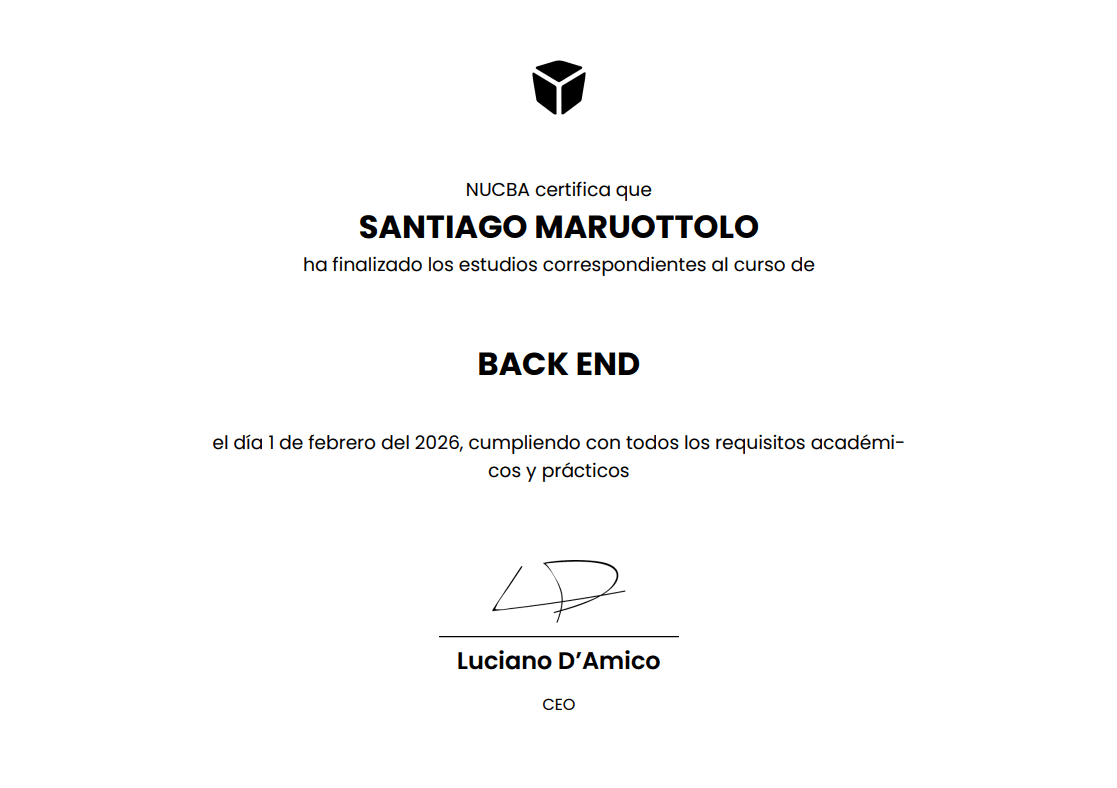
NUCBA certification: designing REST APIs with Node, Express and TypeScript, MongoDB persistence, Redis caching and JWT security.
Model Armor protects AI applications against prompt injection and malicious data: prompt and response filtering on the API path.
The Google Workspace security console in practice: 2-Step Verification with backup codes, security keys, app passwords, device controls and conditional access.
The attack surface of AI in the cloud: threats to models and data, shared responsibility controls and security practices for AI workloads.
Planning a next-generation firewall on Google Cloud: network firewall rules, segmentation and perimeter decisions before deploying.
Data classification, loss prevention, retention, eDiscovery and export in Google Workspace: labels for Drive and Gmail and the controls behind the information lifecycle.
Cloud Identity as an IdP: instance and company profile setup, user lifecycle, Active Directory sync and its relationship with Google Workspace.
Microsoft Entra as the identity plane: authentication, authorization, conditional access and governance. What I took away is that identity is the first architectural decision and the last one you want to change.
The operational work behind an identity system: onboarding, reassignments, groups, permissions and periodic reviews. What I took away is how much of an organization's security is maintenance rather than design.
How the security pieces fit together in Azure: Defender, Sentinel, Key Vault, Defender for Cloud and security posture as a service. What I took away is that security is a telemetry chain, not a list of products.
Choosing a database as an architectural decision: relational or not, modelling, indexes, transactions and schema evolution. What I took away is that the database choice dictates the concurrency model.
Governance for Power BI content: workspaces, row-level security, endorsement, versioning and lifecycle. What I took away is that in BI most of the work is not the report, it is deciding who sees what.
The language of measures: filter context, time intelligence, iteration and what an expensive measure costs. What I took away is that a measure name is a business decision, not a label.
Report design aimed at somebody making a decision: visual hierarchy, focus, colour accessibility and information density. What I took away is that a report is tested with the reader's question, not the author's.
Fact tables and dimensions, relationships and granularity: the model that holds every measure. What I took away is to define granularity before choosing tables, because afterwards it cannot change without a rebuild.
The stage that decides the quality of everything after it: load, clean, type and validate before modelling. What I took away is to type data early, because a mistyped column propagates all the way to the report.
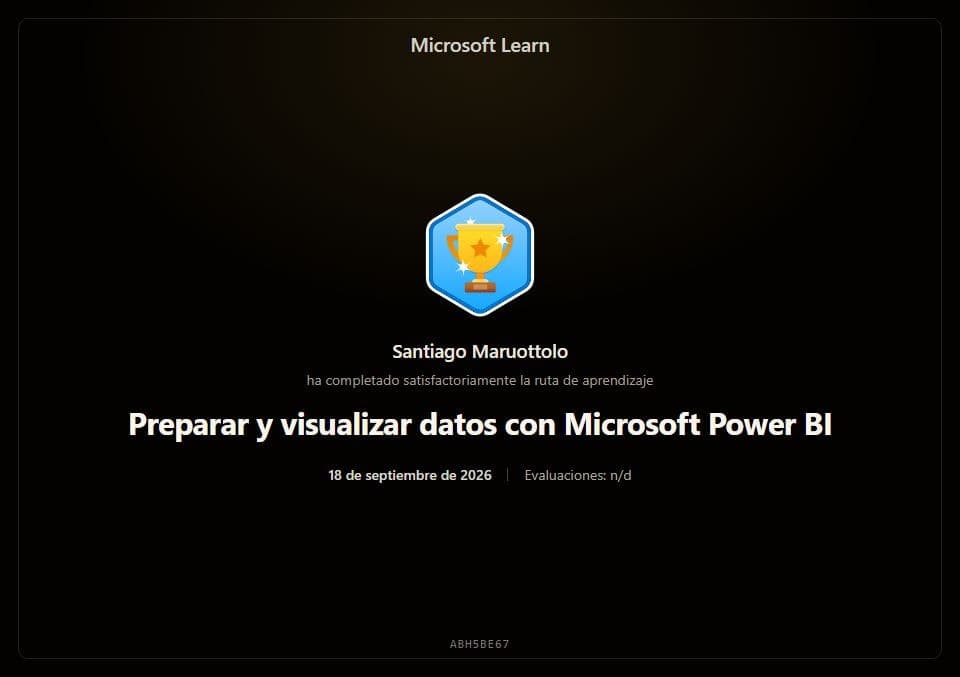
The full path from raw data to report: connectors, Power Query, modelling and visualisation. What I took away is that 70 % of the work happens before the chart, and that is where you find out whether the report is any good.
When to pick a document, key-value or graph store, and what each model gains and loses. What I took away is that the choice is not defined by the technology but by the access pattern.
The full journey: from the question to the data, from the data to the measure and from the measure to the report. What I took away is that 70 % of the work happens before the visual.
Microsoft Applied Skill: AI agents on Azure with conversation memory and the ability to act, from a single expense agent to a multi-agent travel booking flow.
From agent fundamentals to a deployable multi-agent solution on Microsoft Foundry: tools, MCP, Foundry IQ, Agent Framework and A2A.
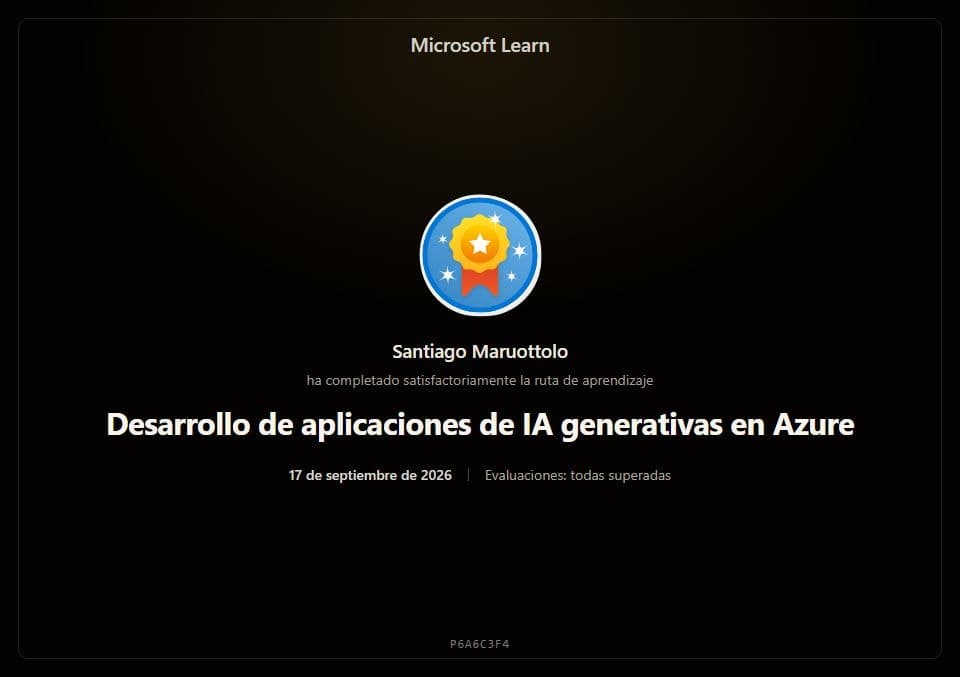
Building on Azure OpenAI: choosing the model, designing prompts, adding retrieval and evaluating the output. What I took away is that the prompt is the program's interface and therefore deserves version control.
Conversational agents on Vertex AI and Dialogflow CX: flows, intents, fulfillment and Gemini integration in the conversation.
Orchestrating multi-agent workflows with Gemini Enterprise: how to split work between assistants and automate actions across systems.
AI security extends cybersecurity to the specific risks of AI systems: jailbreaking, prompt injection, lifecycle controls and red teaming.
Model Armor protects AI applications against prompt injection and malicious data: prompt and response filtering on the API path.
The attack surface of AI in the cloud: threats to models and data, shared responsibility controls and security practices for AI workloads.
What an agent is compared to an AI application: tools, memory, planning and the decision loop. What I took away is that an agent without tools is an expensive way to generate text.
Responsible AI for leaders: Google's principles (useful, fair, private, safe) turned into product and governance decisions.
What distinguishes AI from classic programming: data, training, inference and hallucinations. What I took away is that a model is a function with weights, not a database it queries.
The first Gemini Enterprise application: data source connectors, grounding and an agent that answers about the company.
The map of Azure's AI services: vision, speech, language, search and Document Intelligence, with their use cases and limits. What I took away is choosing by task rather than by product appeal.
Gemini in Google Meet: summaries, action-item capture and the features that turn a meeting into a working document.
How generative AI is used in day-to-day development: prompts, responsible use and the limits of the tool. What I took away is that the tool does not shorten judgement, it amplifies it: the result is as good as the question.
Gemini and Apps Script in short automation sprints: from asking the model to running the task in Google tools.
Building a video game with AI in Google Antigravity: the development agent, prompts and the assisted prototyping cycle.
Bicep, ARM and Desired State Configuration to put infrastructure under version control: templates, parameters, environments and desired state. What I took away is that a rebuilt server must be indistinguishable from the previous one.
Security and evidence inside the pipeline: policies as code, dependency checks, licences and traceability for every change. What I took away is that compliance is a product shipped alongside the software.
Version control, packages, registries and updating dependency resolution. What I took away is that a transitive dependency is my code in everything that matters except the licence.
What an internal platform really is: paved roads, golden paths, self-service for product teams and developer experience. What I took away is that the goal is not the technology, it is that the product team stops asking.
GitHub Advanced Security: secret scanning across the whole Git history, dependency management with Dependabot and code scanning with CodeQL.
CodeQL treating code as data: queries over the relational database, variant analysis, GHAS administration and repository-level security policies.
Security in Azure DevOps pipelines on a banking scenario: pipeline resources, agent identity, permissions, templates and secure variables.
Google Security Operations (Unified SecOps): the unified console, event ingestion, investigation cases and detections on a training environment.
Google's SRE culture: SLOs, error budgets, blameless postmortems and the balance between release velocity and reliability.
NUCBA certification: designing REST APIs with Node, Express and TypeScript, MongoDB persistence, Redis caching and JWT security.
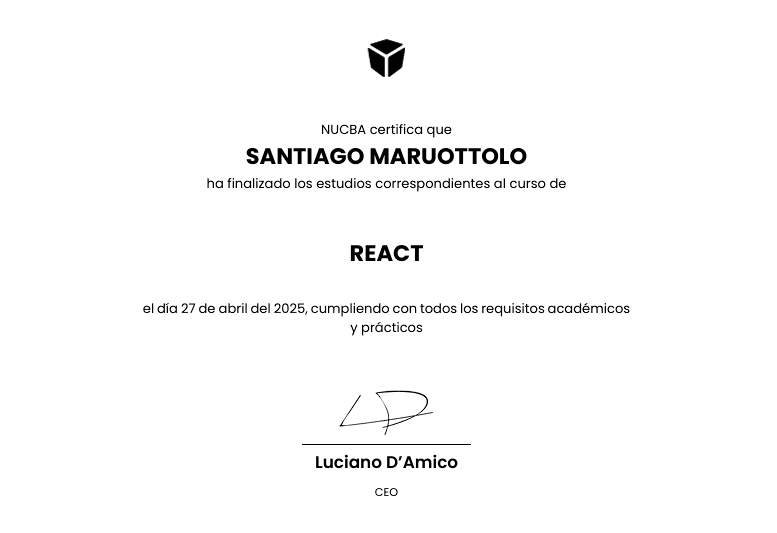
NUCBA certification: React, component-based architecture, hooks, global state management, routing and API consumption.
What sits under the console: regions, availability zones, services and the shared responsibility model. What I took away is the exact line between what the provider protects and what I protect.
NUCBA certification: modern JavaScript, asynchronous code and promises, DOM manipulation and events, and functional programming on ES6+.
Certification from the Government of the City of Buenos Aires: user research, information architecture and usability testing.
NUCBA certification: web design, semantic HTML5, accessibility, mobile-first layouts and the ecosystem of preprocessors and UI frameworks.
HTML as a markup language, CSS for presentation and web accessibility from the start: screen readers, keyboard navigation, contrast and Lighthouse.